Sleeping Safer: A Bed Positioner to Improve Sleeping with Dystonic Cerebral Palsy
My Role: Human Factors Engineer & Designer
Tools: Drill Press
Context: Project for Foundations of Assistive Technology Class, working with two occupational therapy students. Each team creates a product needed by a disabled member in the Boston area.
Project Scope:
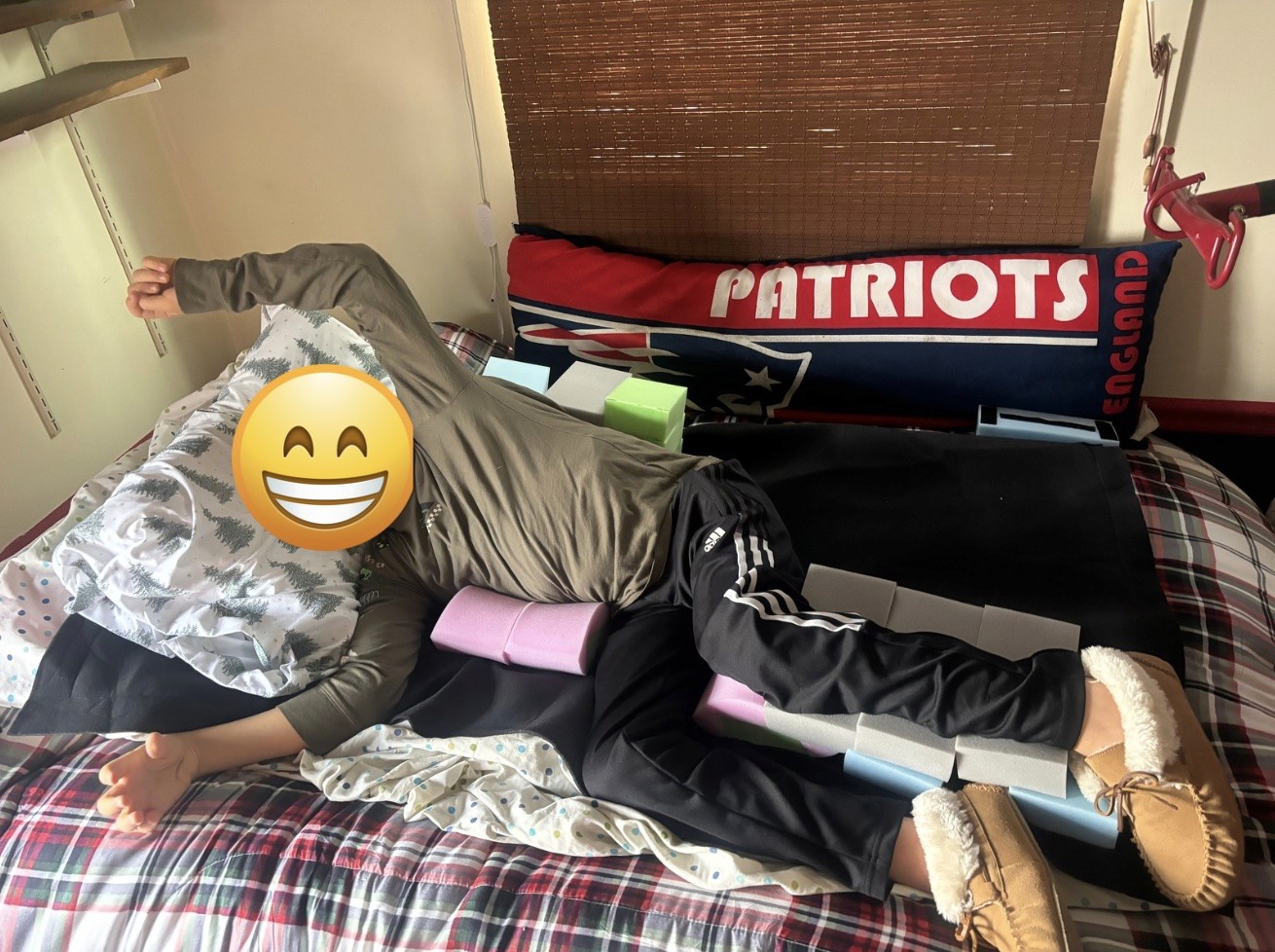
A semester-long project to build a bed positioner for Gabriel, a 14 year-old boy with dystonic cerebral palsy. His condition involves involuntary muscle movement and stiffness, making it impossible for him to sleep on his side. The goal is to create a comfortable environment for him to sleep on that also allows him to sleep in positions other than on his back. Navigating a limited budget required innovation in material choices and minimal trialing.
Key Decisions
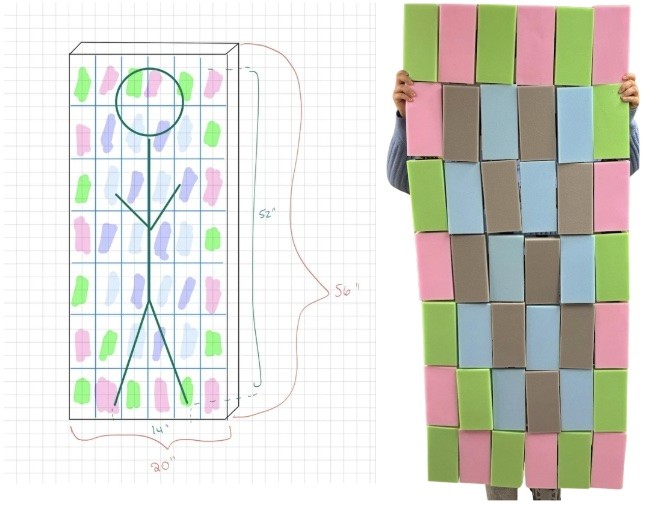
1) Using gymnastics foam blocks to assemble the base of the positioner and build bolsters. This allowed for a cleaner aesthetic, color coding, comfort, and adjustability.
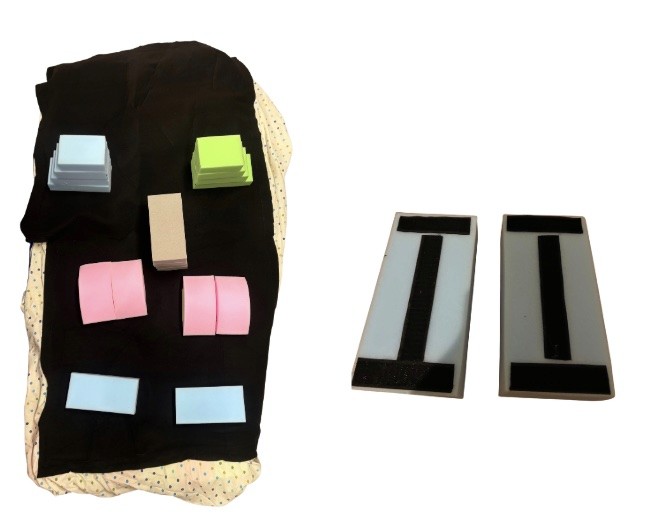
2) Sewing a large sheet of soft velcro onto a full-size fitted sheet to place on top of the base of the positioner (or his mattress). Velcro was glued to the bottom of the supports to attach and kept them extremely stable during Gabe’s trials.
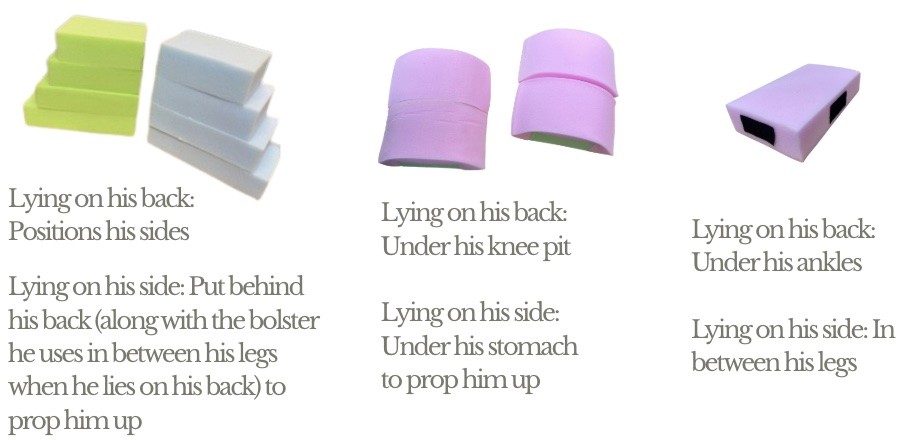
3) Configuring bolsters in a way that can be used in multiple areas, depending on if Gabe is positioned on his side or on his back.
Key Features
1) Base is transportable due to easy disassembly via velcro connections
2) Device is waterproof/easily cleanable due to the velcro sheet covering the base
3) Size of the positioner is adjustable, with extra blocks prepared with velcro to support any growth of the client
Client Feedback
Gabe loved the positioner. His parents and caretaker were happy with how supportive the bolsters were, and Gabe has been able to sleep on his side using our device!
The base wasn't needed for Gabe's mattress at home, but the family plans on using it when they travel and repurposing some of the blocks as extra bolsters as needed.
Project Scope:
A semester-long project to build a bed positioner for Gabriel, a 14 year-old boy with dystonic cerebral palsy. His condition involves involuntary muscle movement and stiffness, making it impossible for him to sleep on his side. The goal is to create a comfortable environment for him to sleep on that also allows him to sleep in positions other than on his back. Navigating a limited budget required innovation in material choices and minimal trialing.

Key Decisions
1) Using gymnastics foam blocks to assemble the base of the positioner and build bolsters. This allowed for a cleaner aesthetic, color coding, comfort, and adjustability.
Key Features
1) Base is transportable due to easy disassembly via velcro connections
2) Device is waterproof/easily cleanable due to the velcro sheet covering the base
3) Size of the positioner is adjustable, with extra blocks prepared with velcro to support any growth of the client
2) Sewing a large sheet of soft velcro onto a full-size fitted sheet to place on top of the base of the positioner (or his mattress). Velcro was glued to the bottom of the supports to attach and kept them extremely stable during Gabe’s trials.
3) Configuring bolsters in a way that can be used in multiple areas, depending on if Gabe is positioned on his side or on his back.
Key Features
1) Base is transportable due to easy disassembly via velcro connections
2) Device is waterproof/easily cleanable due to the velcro sheet covering the base
3) Size of the positioner is adjustable, with extra blocks prepared with velcro to support any growth of the client
Client Feedback
Gabe loved the positioner. His parents and caretaker were happy with how supportive the bolsters were, and Gabe has been able to sleep on his side using our device!
The base wasn't needed for Gabe's mattress at home, but the family plans on using it when they travel and repurposing some of the blocks as extra bolsters as needed.
Client Feedback
Gabe loved the positioner. His parents and caretaker were happy with how supportive the bolsters were, and Gabe has been able to sleep on his side using our device!
The base wasn't needed for Gabe's mattress at home, but the family plans on using it when they travel and repurposing some of the blocks as extra bolsters as needed.